Inspect Your Electrical Stuff
September 2, 2025 — Day 13
Great Lakes State Park, Fayetteville, NY
We hung around in the morning, trying to figure out where to spend the rest of the week. Donna and Bill were arriving today. Our section of the campground was full, we had to move and we also wanted to be near them. So we drove around a found two spots a few sites apart from each other. Perfect. We were about to head into Syracuse to the Erie Canal Museum when they arrived at the campground. We met at the office, they booked their site, we moved tonight’s reservation to the new spot and added two more nights. Easy peasy.
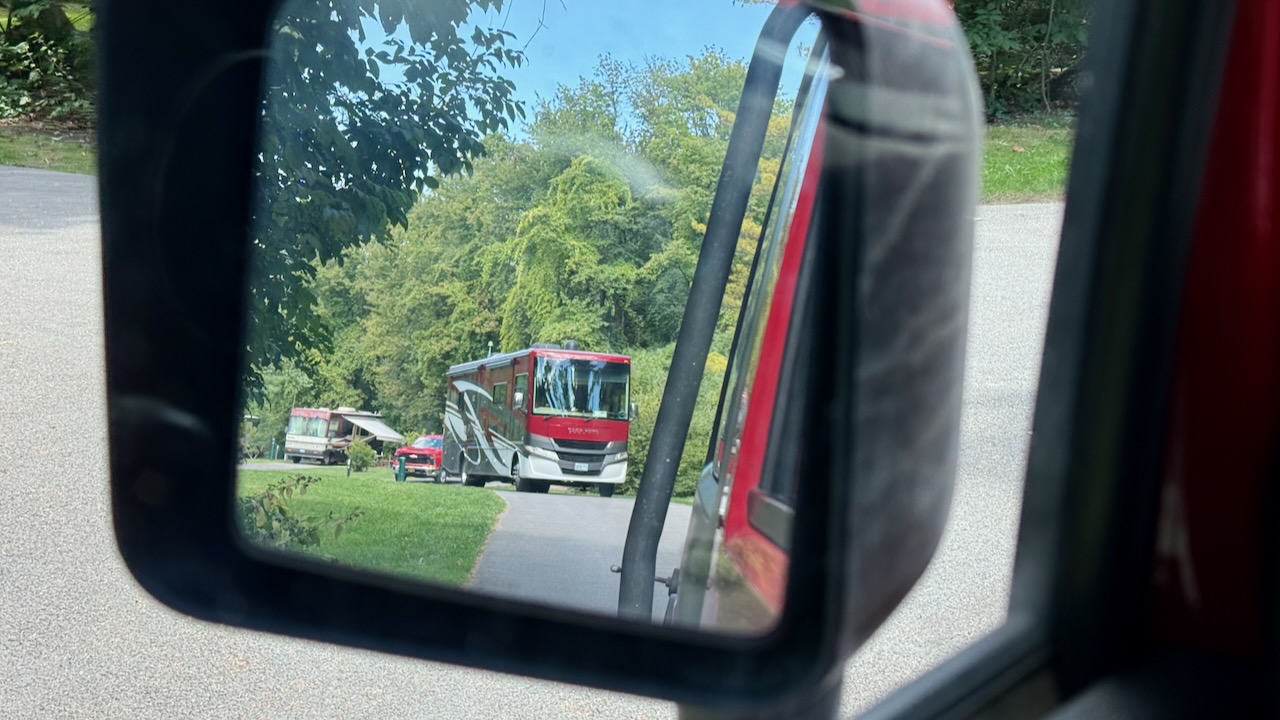
We almost always use the buddy system when backing up, one drives and the other is outside, we both have radios. Susan was driving this time and really wanted to start turning. Paul was say, “No, no, don’t turn.” “But I want to!”
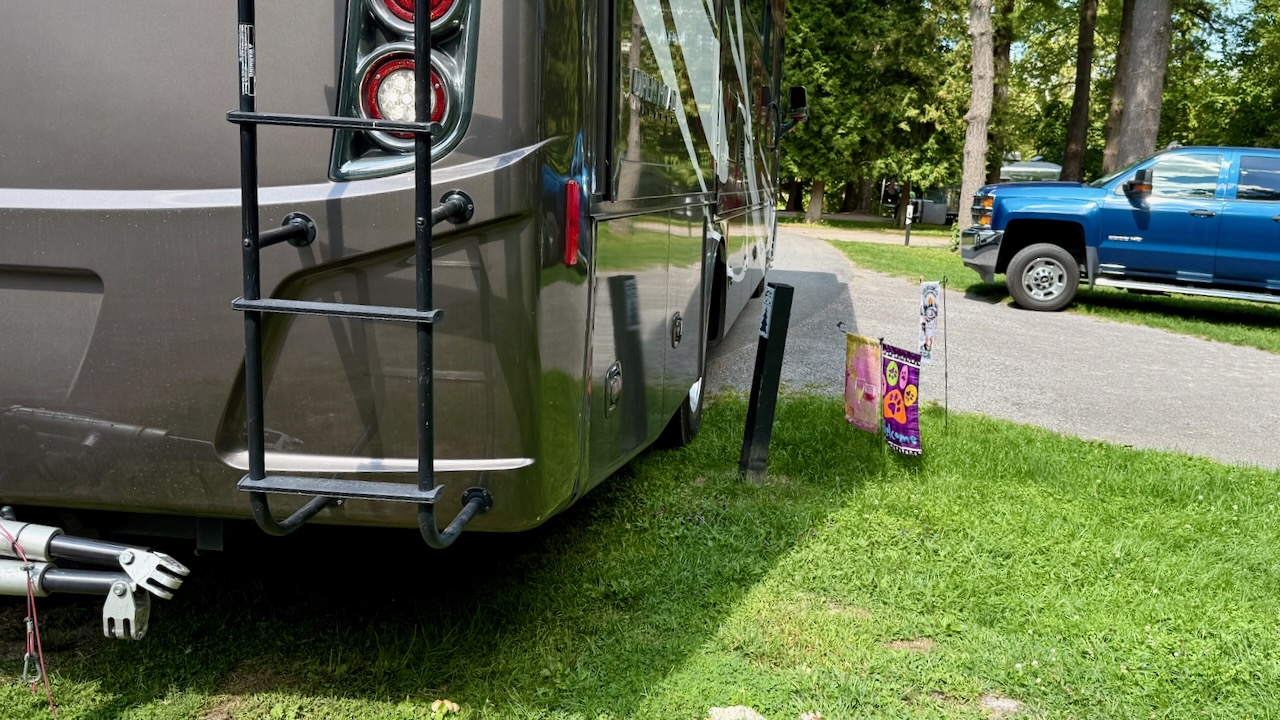
That’s why she couldn’t turn. The rear wheels had to be past that post otherwise the RV would have hit it. (susan here: what we don’t have is what I could see out of my driver’s window—cedar trees. If I didn’t turn I was going to hit them. So I pulled out, reset and the 2nd go at it we were in. It wasn’t an easy park.)
We also learned something new, you must always inspect your electrical stuff every time. Maybe even carry a spare.
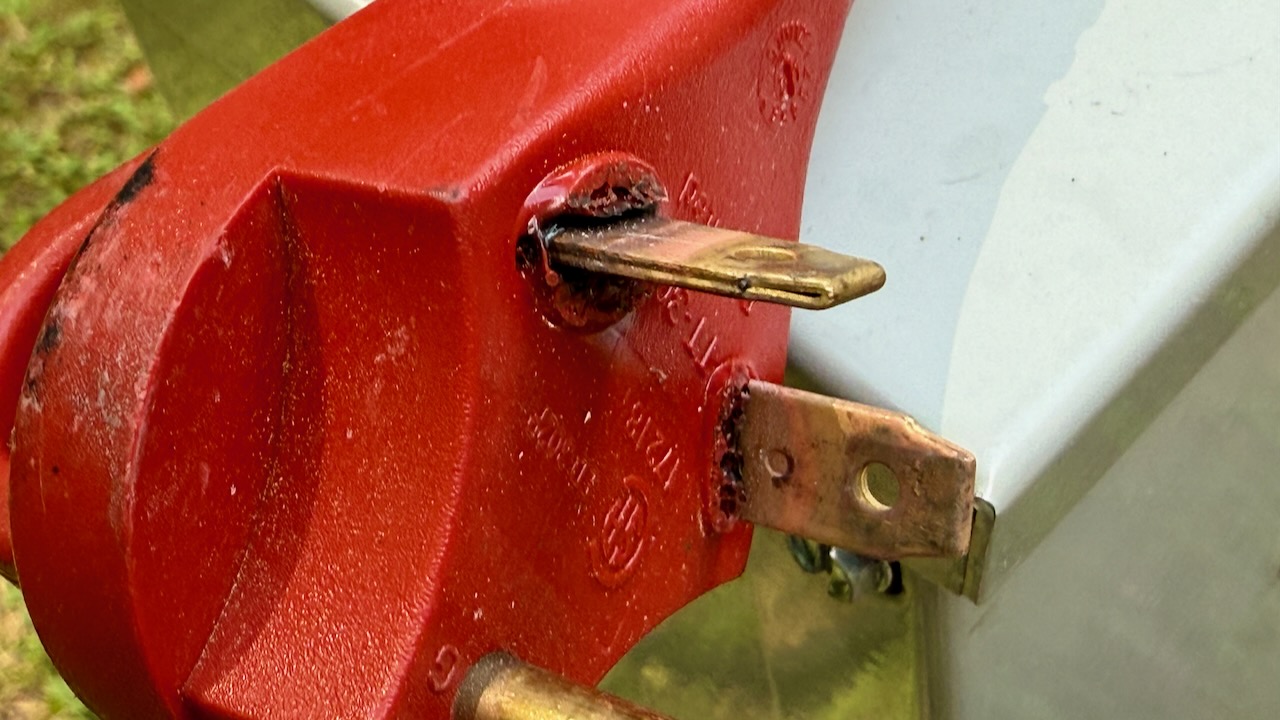
We’d like to blame the last campground but we really can’t prove anything. Fortunately Donna & Bill had a spare. And yes, we’re buying a new one, and this can be our spare.
(susan here: Donna & Bill expect a shipment.)
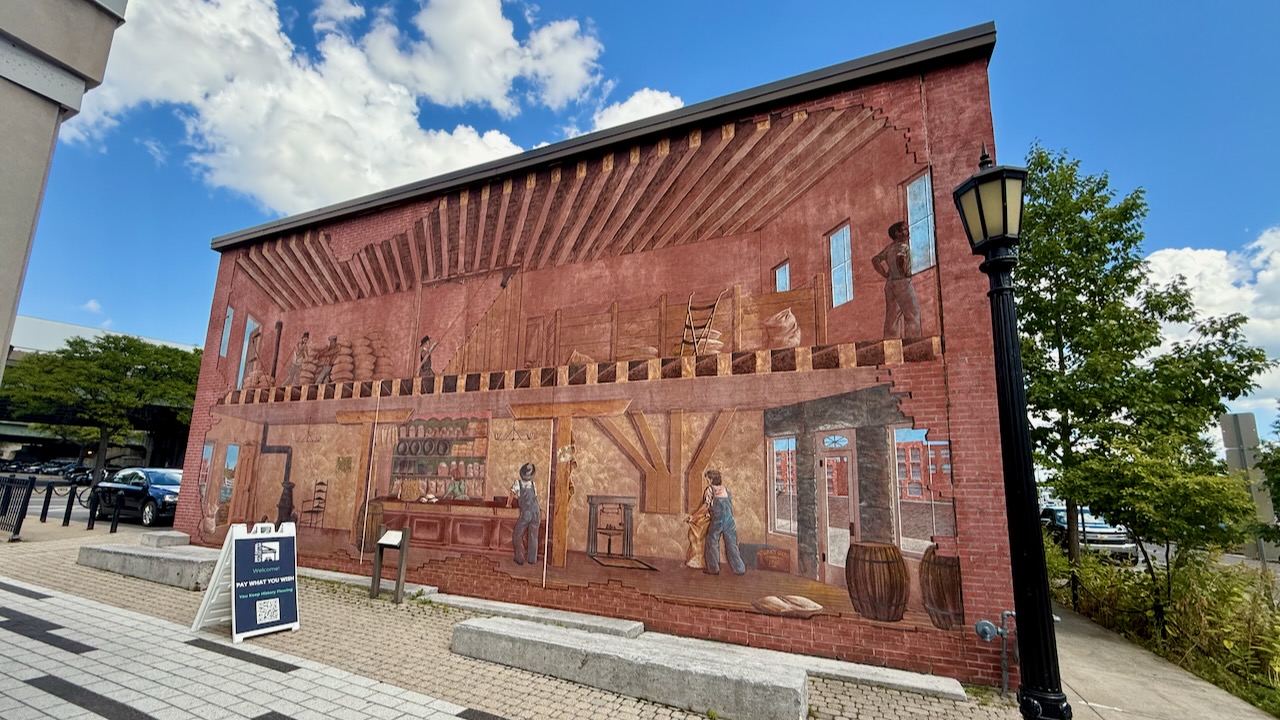
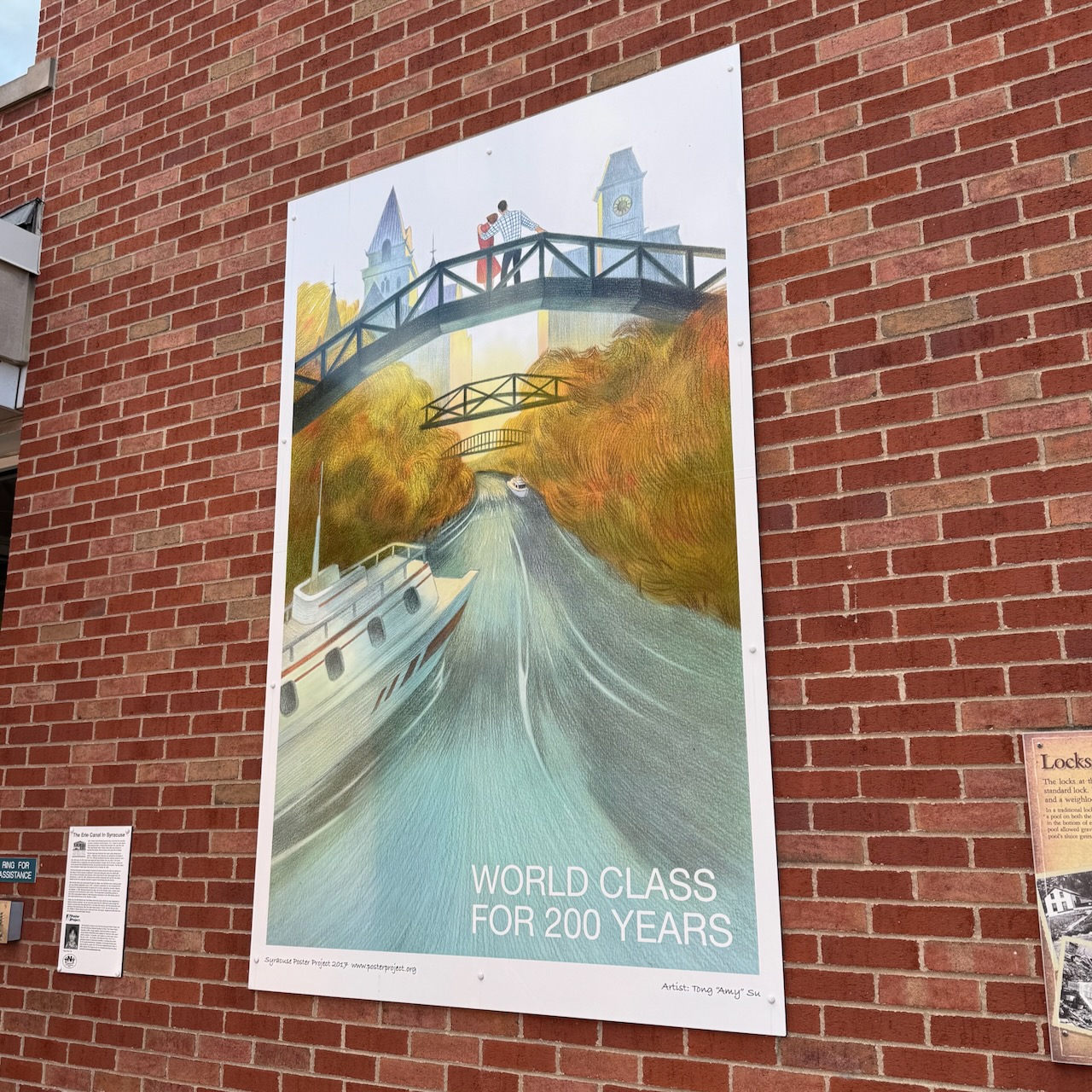
There was a nice mural outside the Erie Canal Museum.
Inside we chatted a lot with the docent. He knew a lot about the canal, the area, and gave us some reccomendations which were unfortunately devoted too much travel time. We’ll remember those for our next visit.
Initially the museum was a wall of words. Some people might find it fascinating. But for us it was a little too much for us.
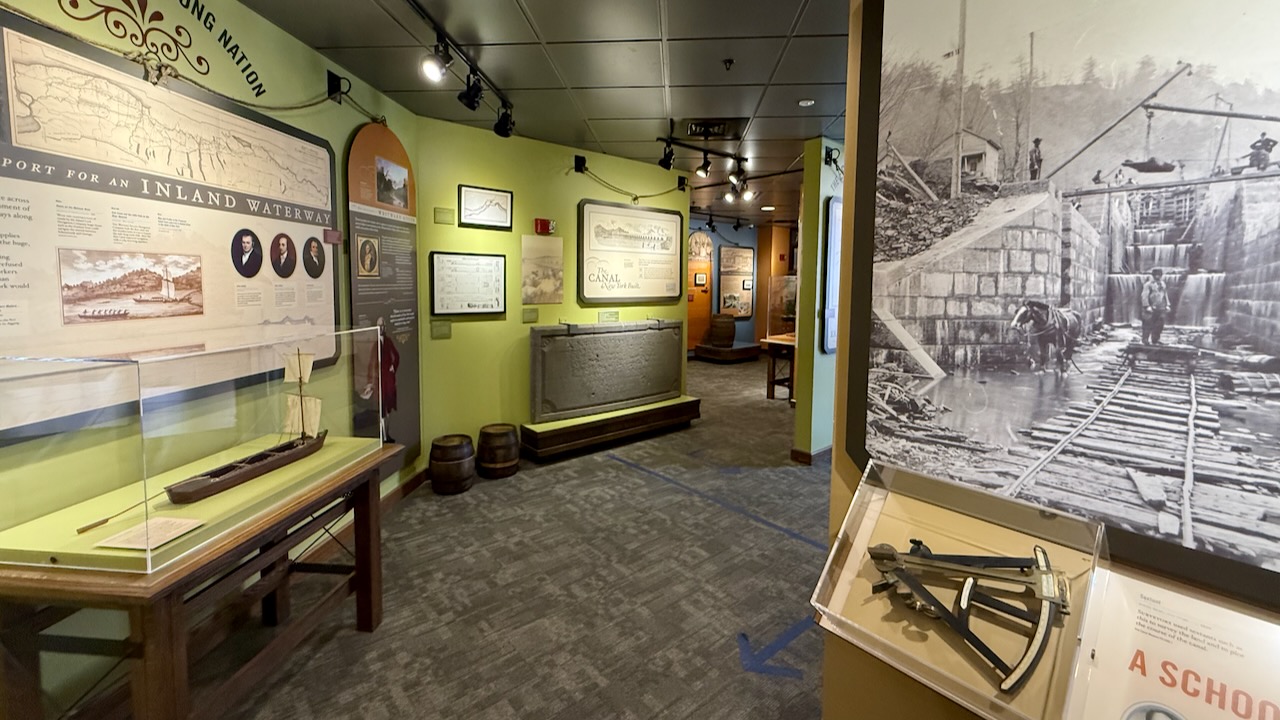
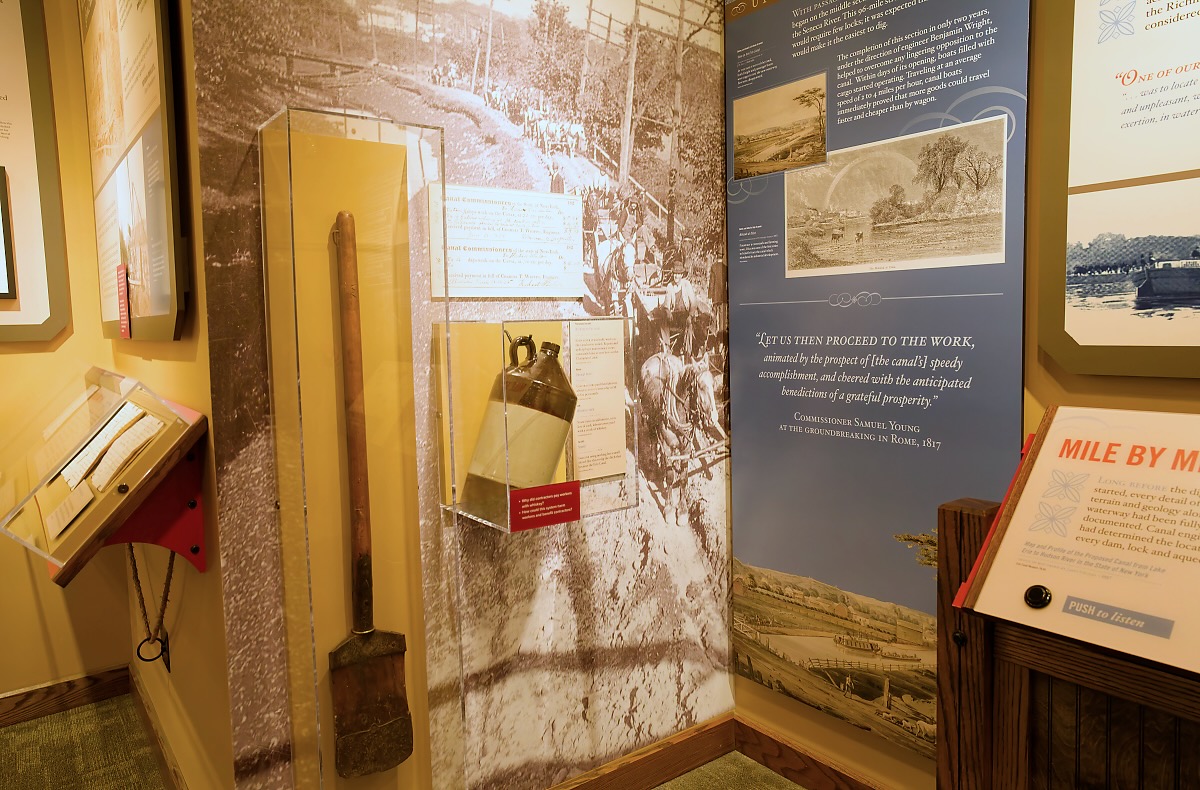
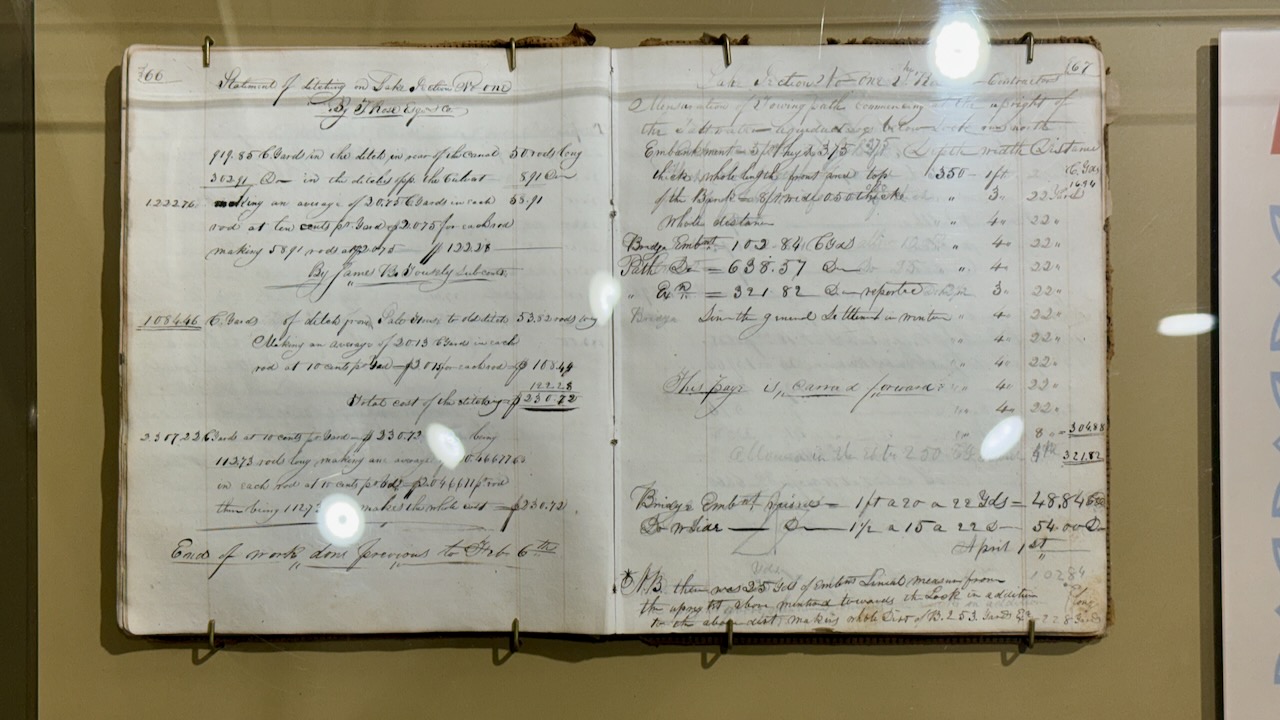
Eventually we got to see cool things, like the tiny shovels used to dig, it must have been only 9 inches wide. And some original documents.
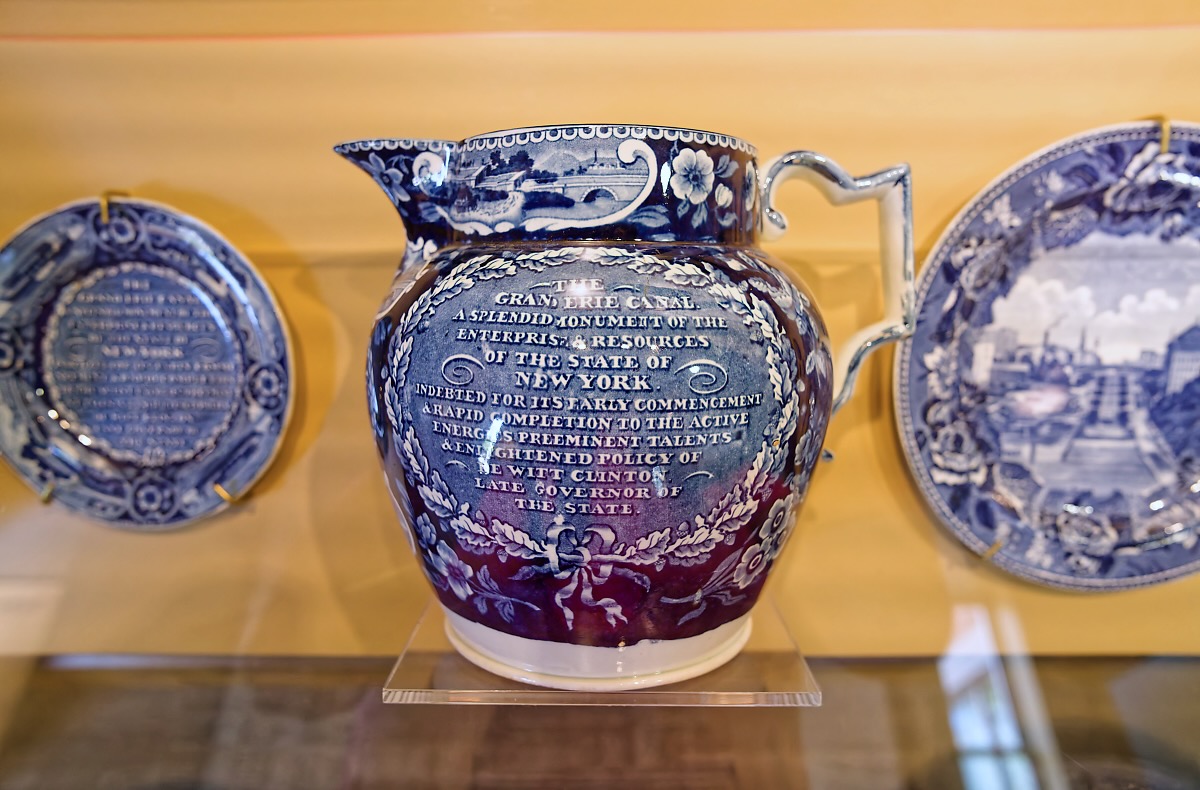
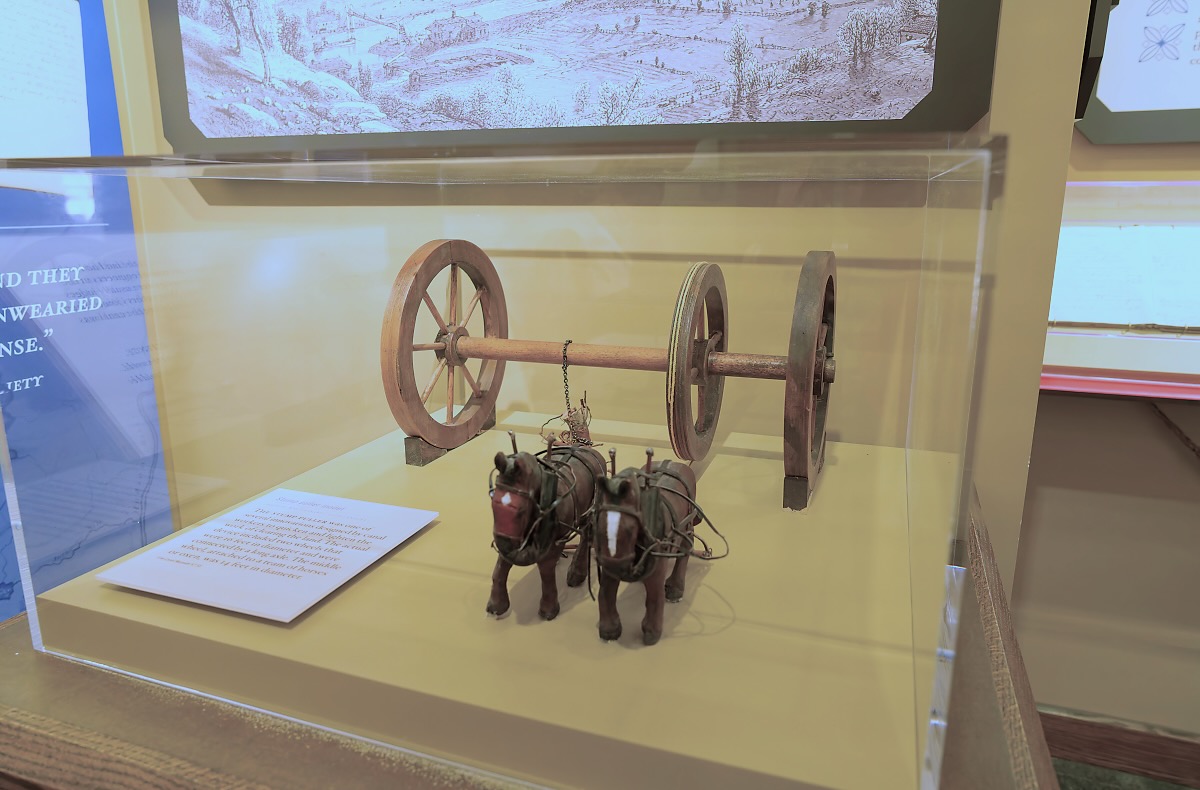
This is a model of a stump puller which had 14 foot diameter wheels.
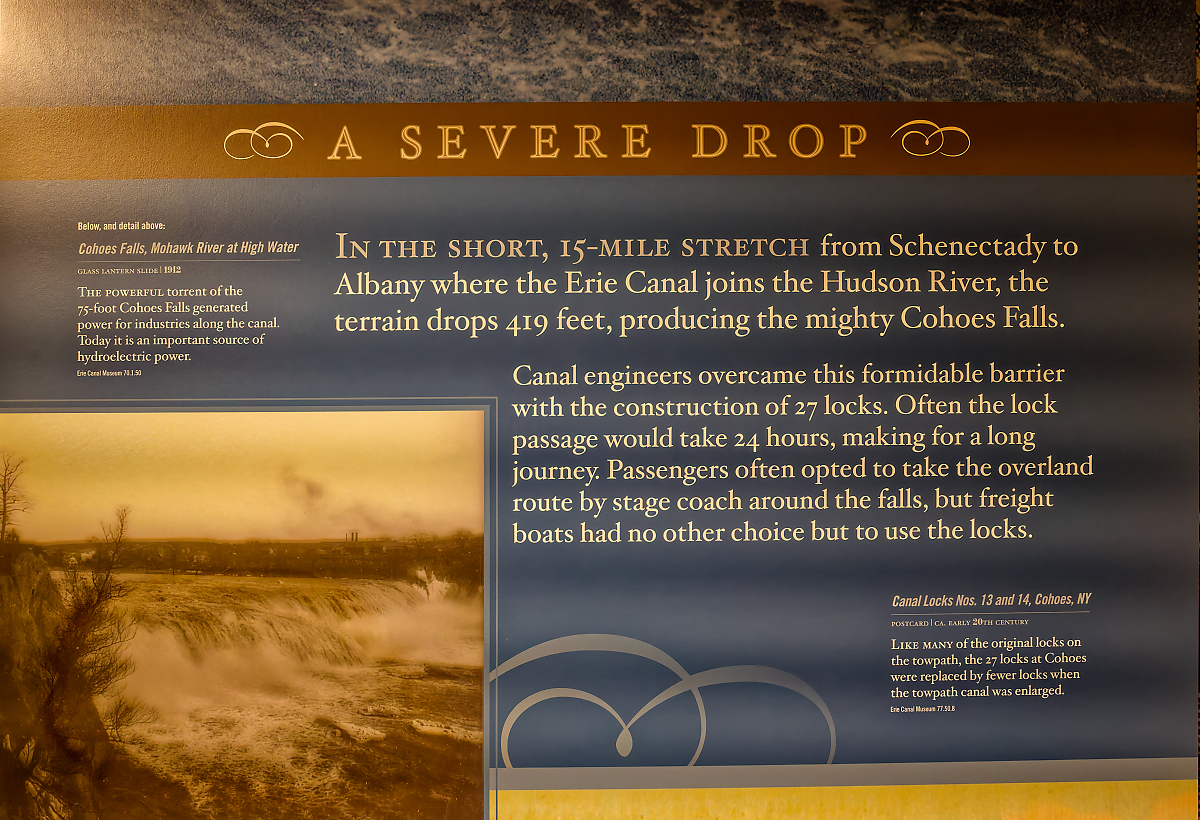
A few of the wordy things were actually quite interesting. Can you imagine digging through 419 feet of height to make 27 locks? Neither can we.
Later we learned that a canal requires a steady source of water.
KEEPING THE CANAL FULL
A CANAL REQUIRES a steady source of water. Maintaining the supply of water to the Erie Canal was a constant challenge. Leakage and water loss through the canal bed and banks were frequent and required ongoing maintenance and repair of the canal prism and embankments.
As industries developed along the canal corridor, water was increasingly diverted to produce water power to operate mills and factories. The need for water grew as canal traffic got heavier and the canal got wider.
— from a plaque on the wall
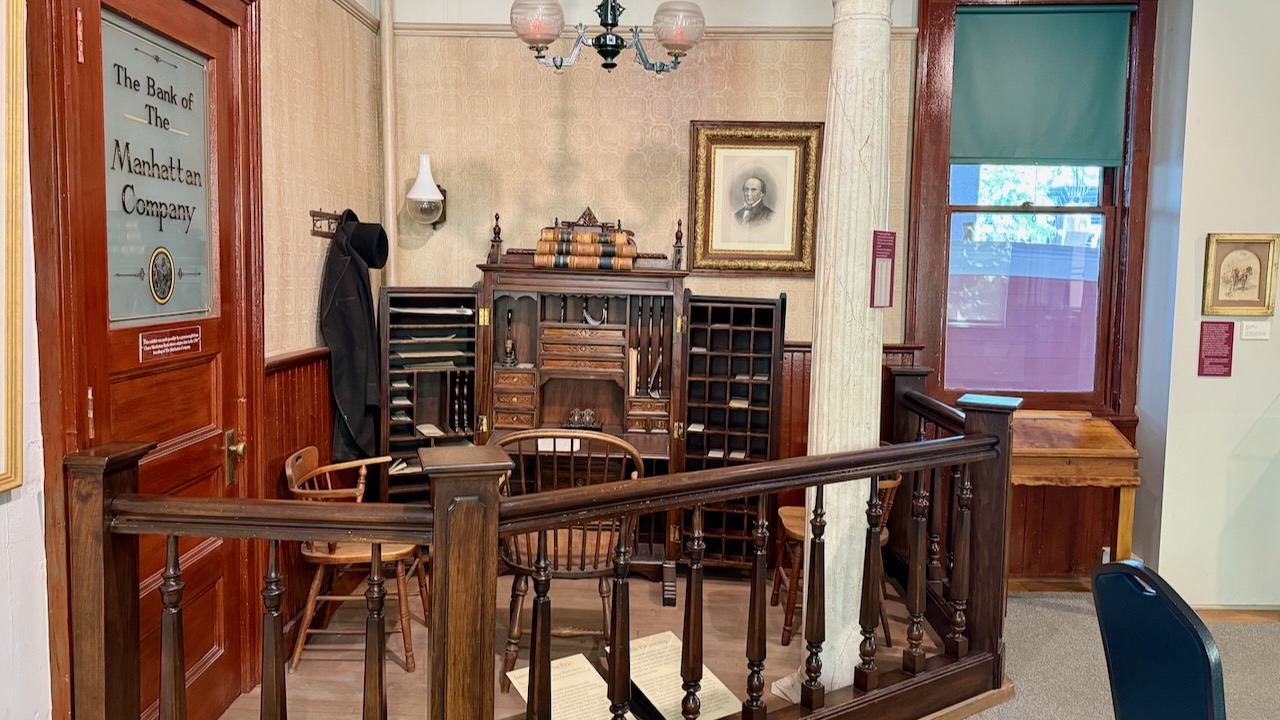
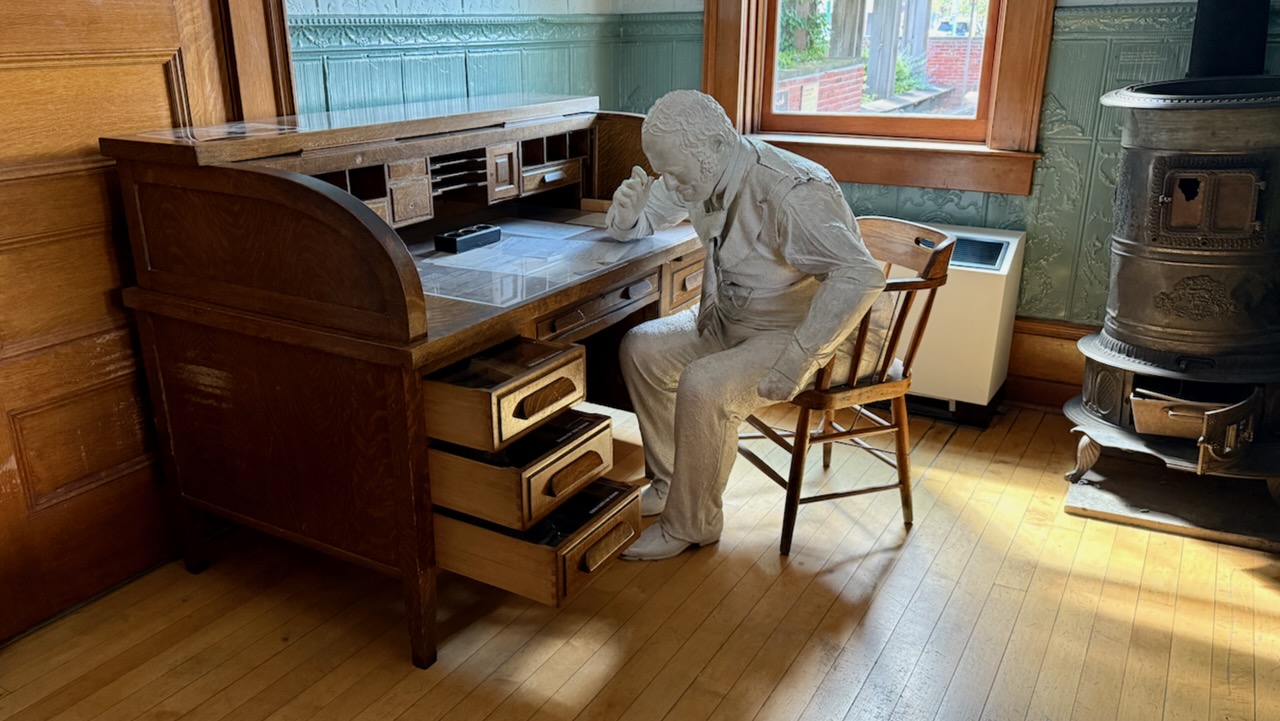
The museum was located in the Weighlock building, the original building where they weighed the boats to collect tolls. Here’s the weighmaster’s office.
Of all of the canal structures built in Syracuse, the Weighlock Building is the most recognizable.
Completed in 1850, it was the third and final weigh station in Syracuse. The Weighlock Building was built of red pressed brick and designed in the Greek Revival style. The lintels, columns, and pediments were hand cut Onondaga Grey Limestone, the same material used for the adjacent weigh chamber constructed at the same time.
The process of weighing a boat in a weighlock replaced the earlier hydrostatic method. At the Syracuse Weighlock, the boat was enclosed inside the chamber and the water was drained through a sluice gate at the bottom into a culvert leading to Onondaga Creek. As the water level dropped, so did the boat, until if came to rest on a wooden cradle at the bottom of the weighchamber. The cradle was suspended by a series of iron rods and levers. These rods distributed the weight of the boat to a single rod attached to the beam scale. The empty weight of the boat, recorded and filed as part of an annual state registration, was subtracted from the full weight. A toll was assessed on the remaining cargo weight based, in part, on the type of goods on board. This entire process took only fifteen minutes on average.
— from a plaque on the wall
They had an actual boat in the weighing area, we’re not sure if it was original or a reproduction. It was in pretty good shape so we’re both guessing it was reproduction. Paul decided to try his hand at steering.
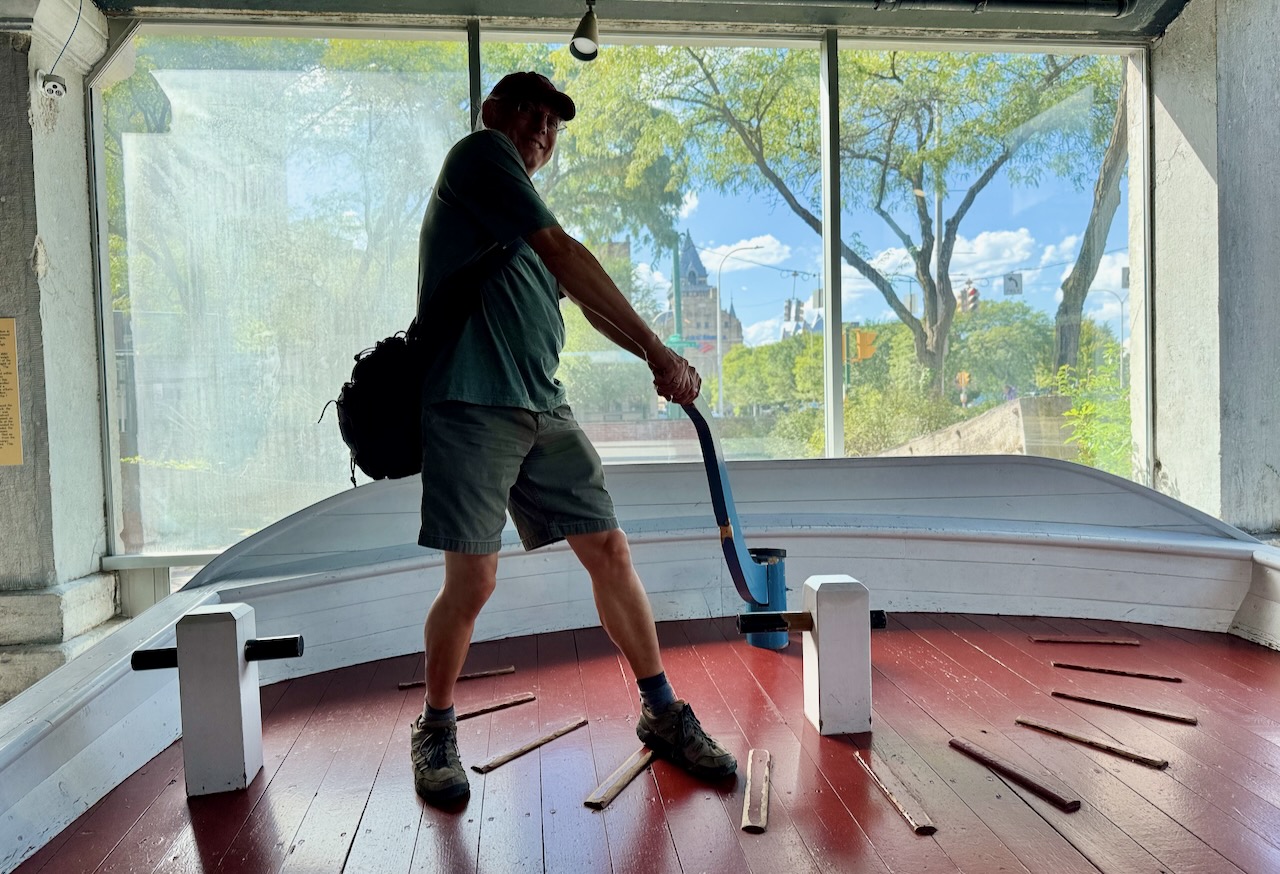
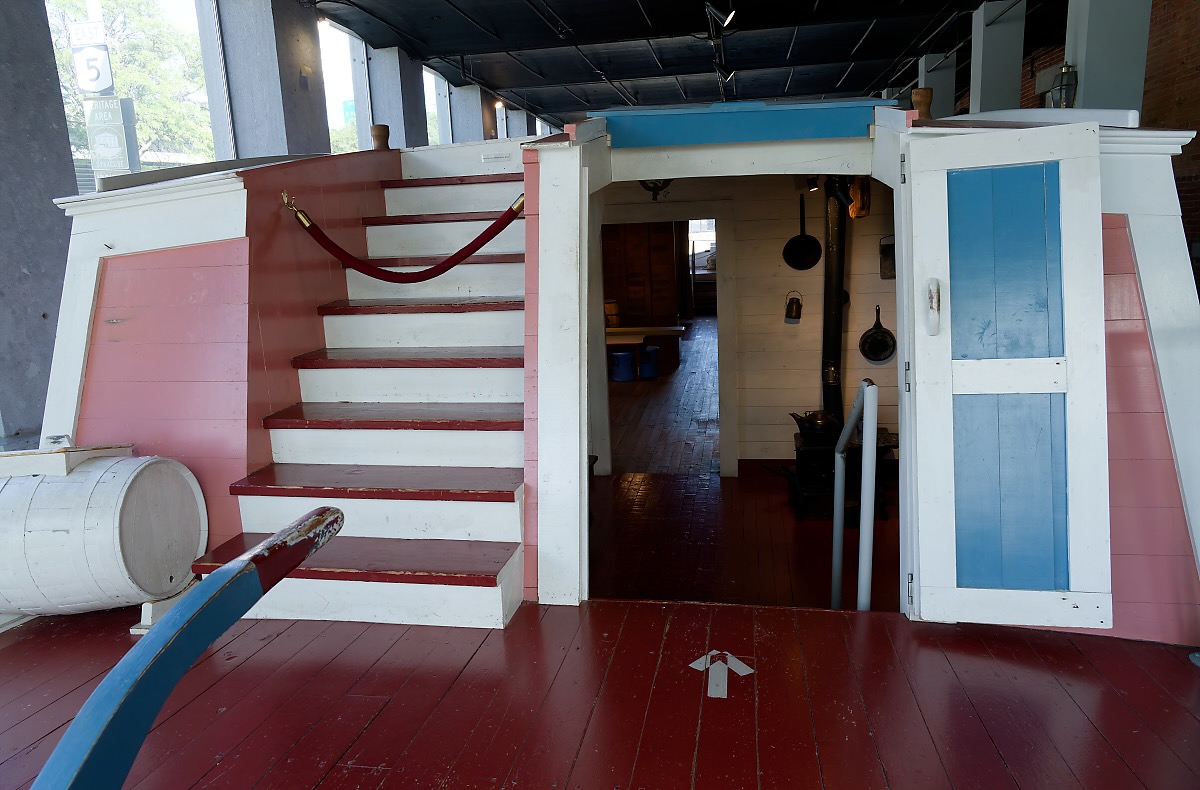
We apologize for the stripy nature of some of these pictures. The shutter on Susan’s new camera was at odds with the LED lights. (susan here: LEDs turn off and on unlike a filament bulb which is constantly on.)
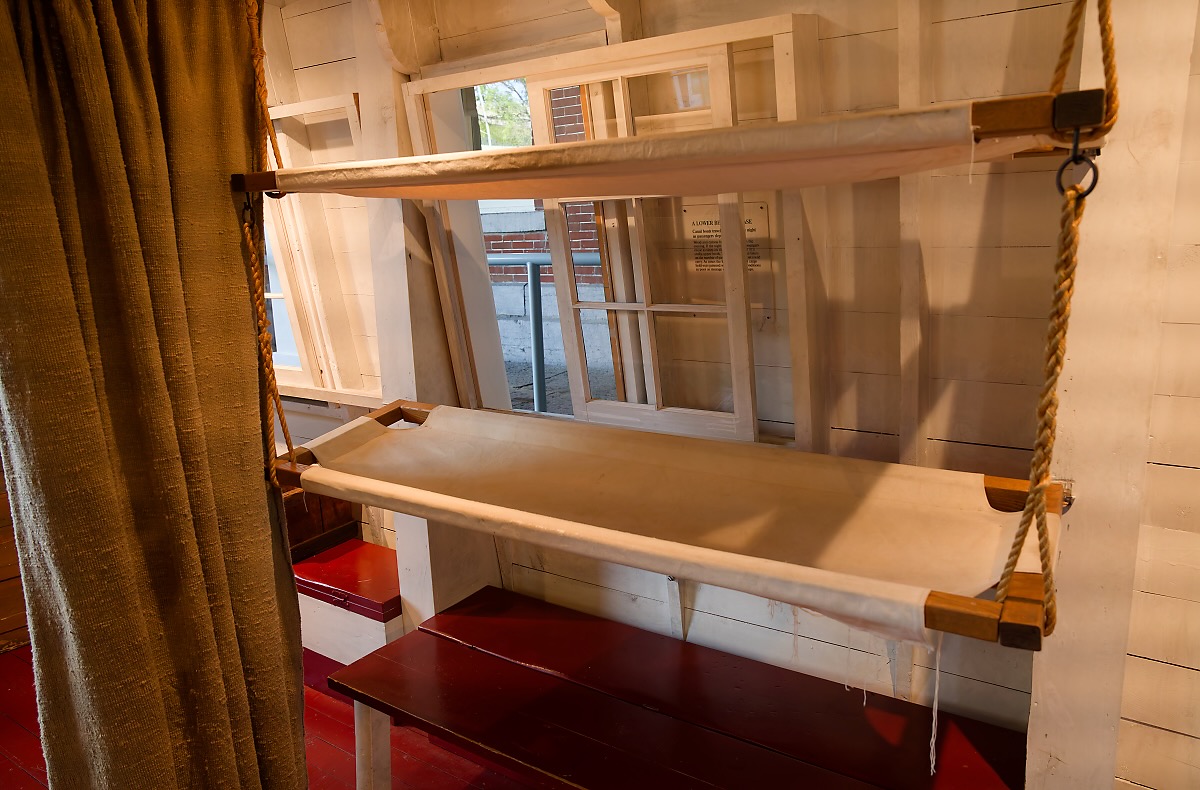
That’s the bathroom behind the curtain, you emptied it over the side! (susan here: and that table is where they ate. Yeah. Luxurious accommodations.)
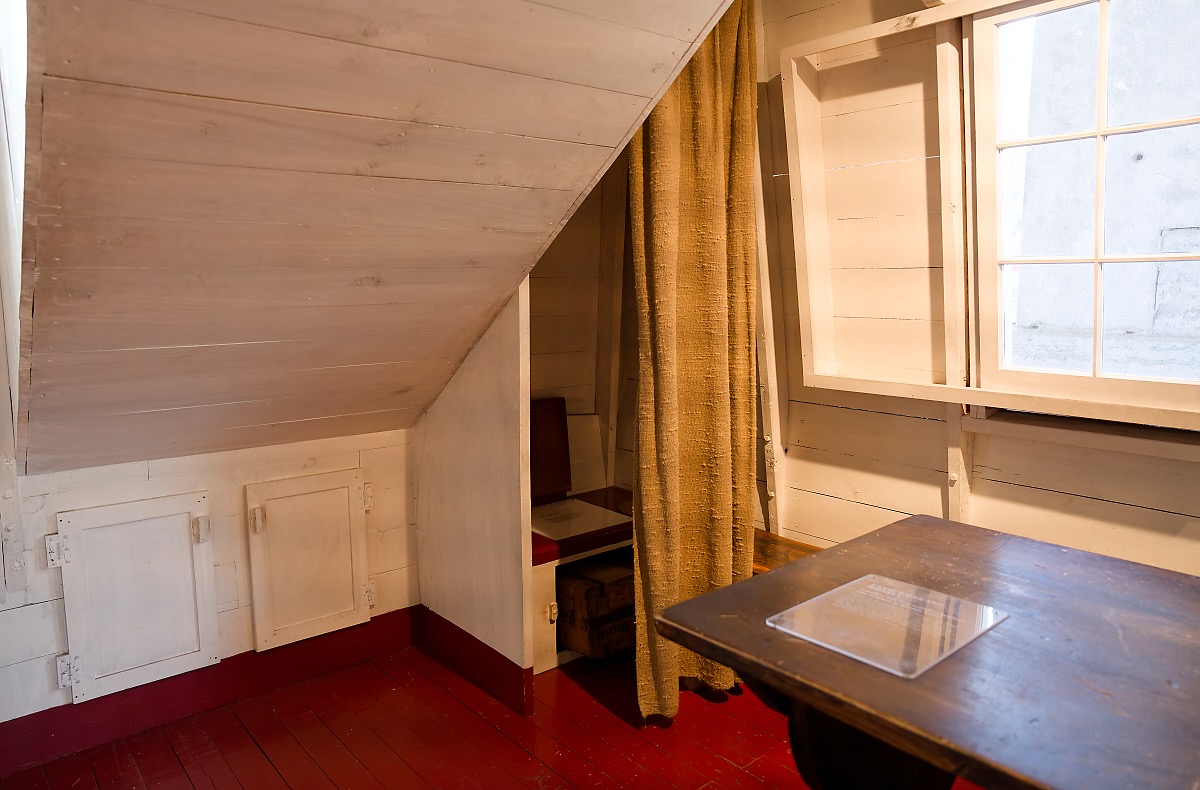
Men and women slept separately. Doesn’t that look comfortable!?
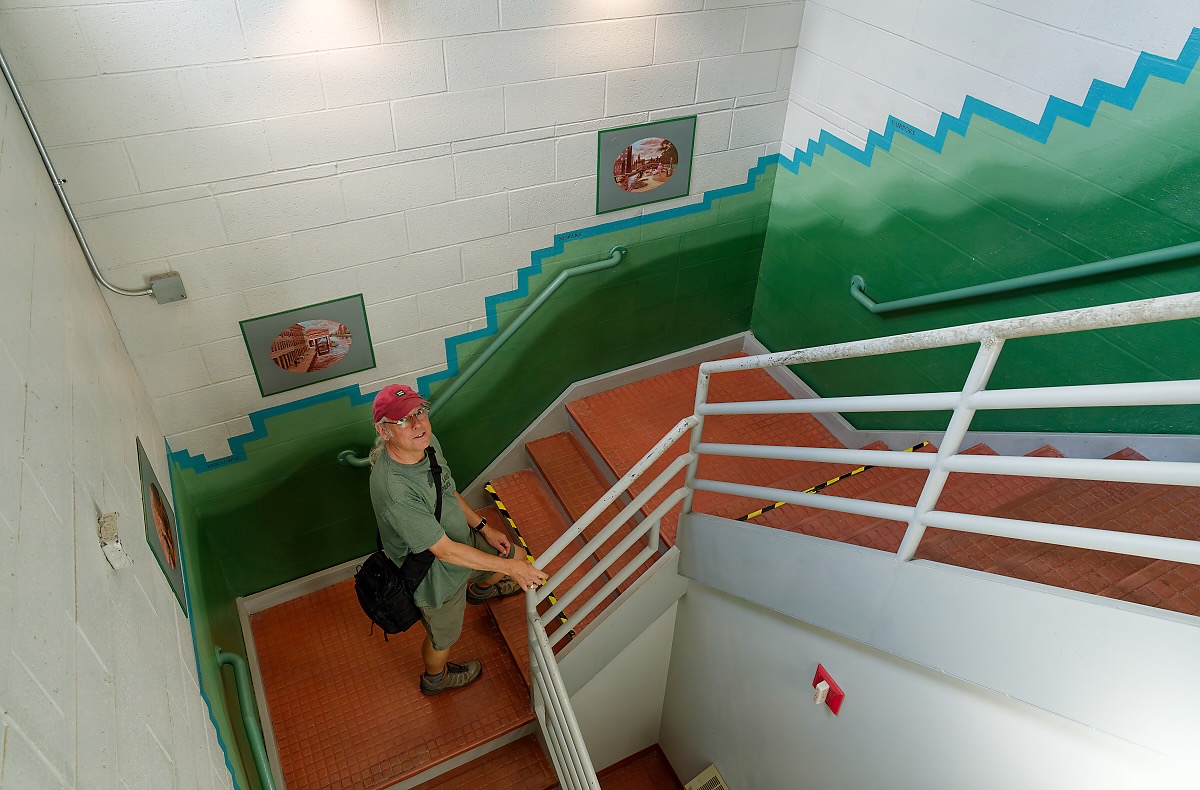
Then we went upstairs. This was the best part of the museum. First, you climbed the stairs which had a representation of the canal’s height changes and every single lock needed to negotiate those changes. This was a really cool way to show the terrain the canal had to traverse.
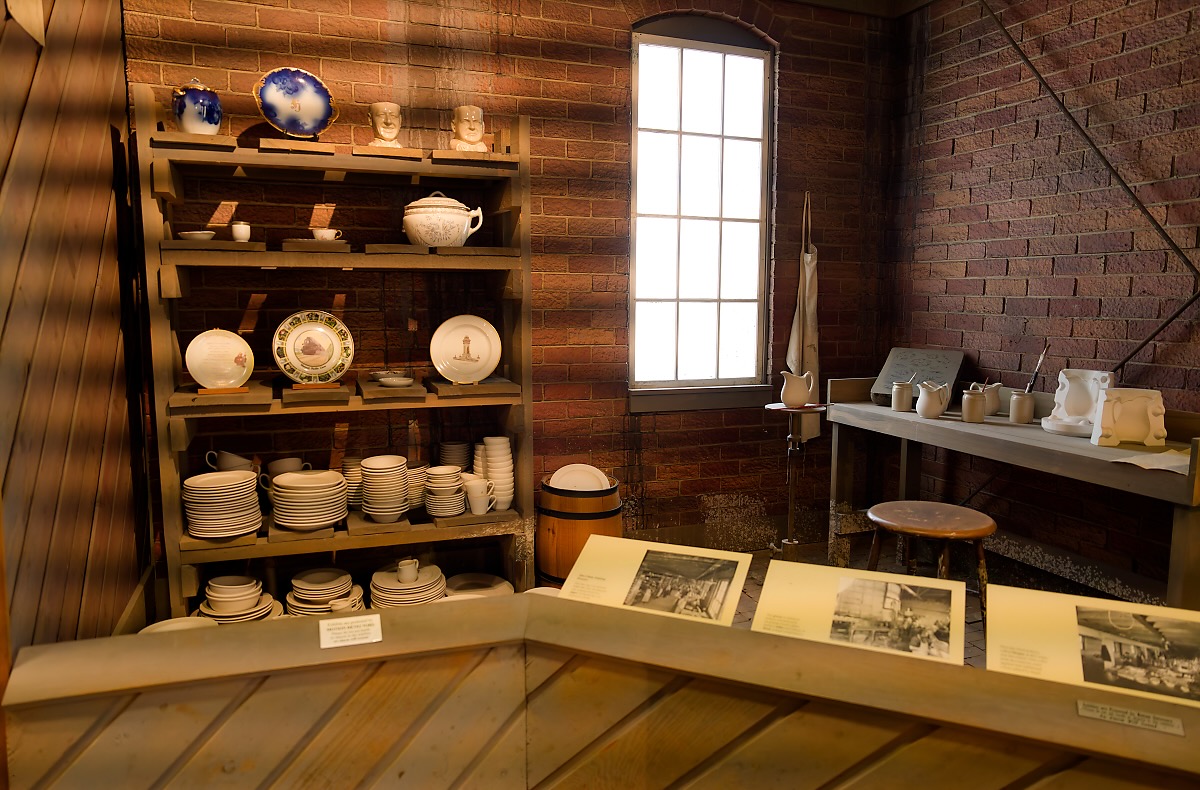
Then you saw many areas showing all types of industries, tavern, general store, china manufacturing, a theater, mining etc…
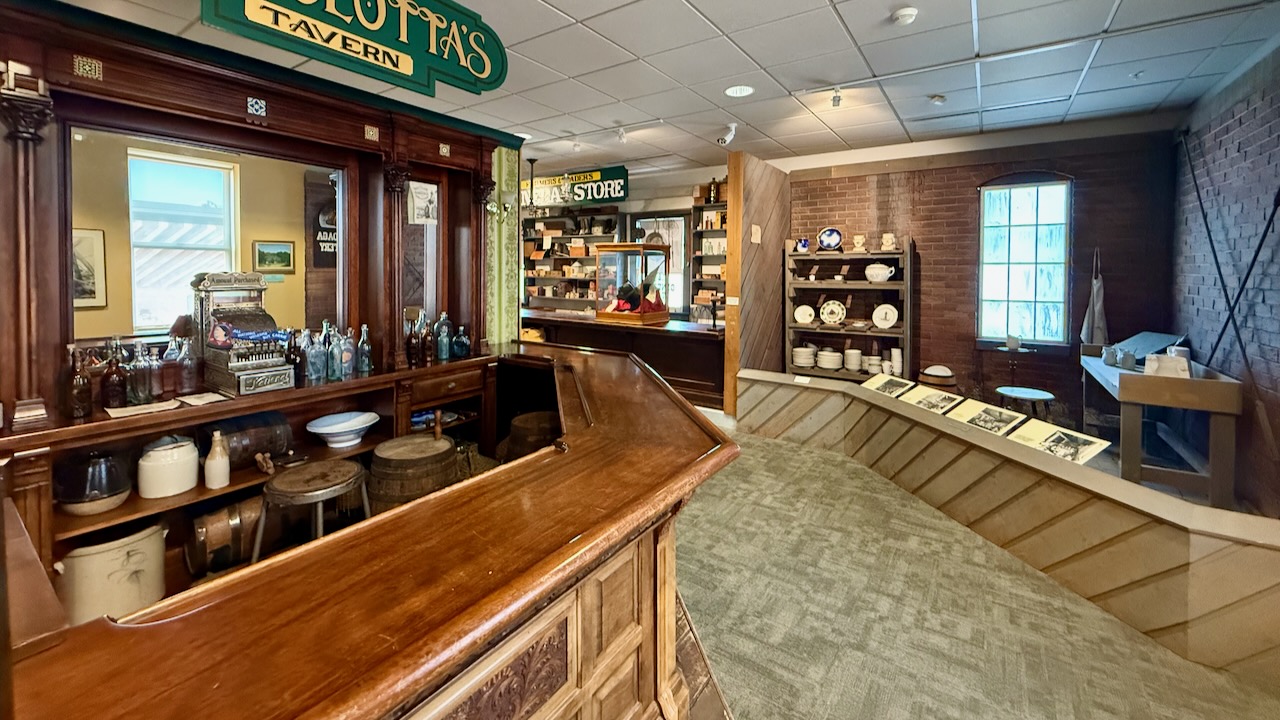
The camera and LEDs broke out into a fistfight here!
And there was a smaller, but still cool, mural outside.
We’re very glad we went to this museum but we’ve also had our fill of Erie Canal history, it was fun, but it was also a lot. It’s understandable why Donna and Bill didn’t want to do it a second time!
We arrived back at the RV & had dinner. Later Donna and Bill came over for conversation and games, staying up way past our bedtimes. (we think it was tomorrow when they departed!) And yes, Donna beat Susan at trains!