Meromictic
September 3, 2025 — Day 14
Green Lakes State Park, Fayetteville, NY
We stayed up so late we all slept in. We all decided that wanted to explore the park, maybe see some birds and have a walkabout. Coincidentally about a month ago Paul had come across the freshwater reef known as Deadman’s Point and there it was on the map of the park! When we booked this park we had no idea that the strange colored water and Deadman’s Point were here.
Remember the docent at the canal museum? He did say we should make it down to the lake to see blue and green water.
Green Lake itself is perhaps the most studied meromictic lake—one in which layers of water do not mix—in the world. The park preserves the largest stand of old growth forest in Central New York, and Round Lake has been designated as a National Natural Landmark by the U.S. Department of the Interior.
The park is centered on two small lakes, Green Lake and Round Lake, which have an unusual blue-green color. These lakes lie at the base of a gorge that is somewhat longer than a mile in length. The lakes and the gorge are remnants of the ice ages, and exemplify some of the unusual geology of upstate New York. Green Lake has a surface area of 65 acres and a maximum depth of 195 feet. Round Lake has a surface area of 34 acres and a maximum depth of 170 feet. — Wikipedia
And why is it green?
… its green color is a result of high levels of calcium carbonate and not phytoplankton or algae that often give lakes a green appearance when their populations are high. Calcium carbonate reflects the green wavelength, thus giving Green Lake its distinctive green color. — NY DECS
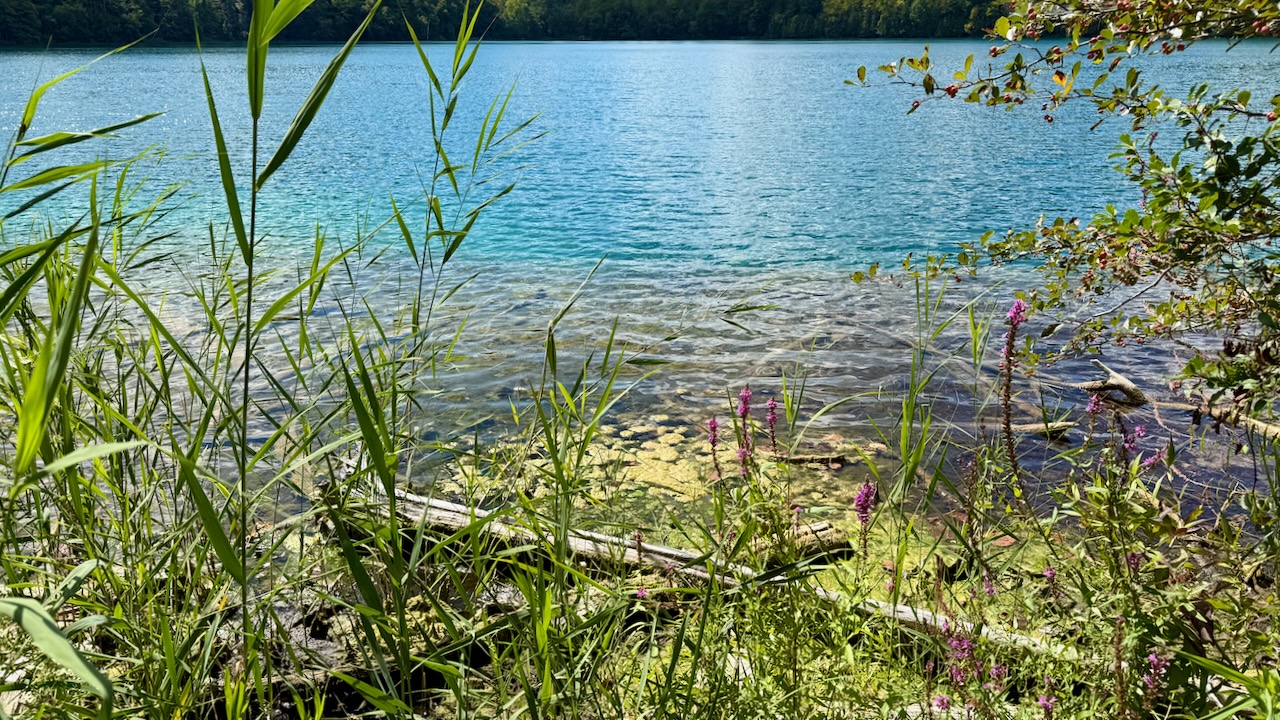
The colors were amazing changing as the light changed. The lake was actually more vibrant than these photos show.
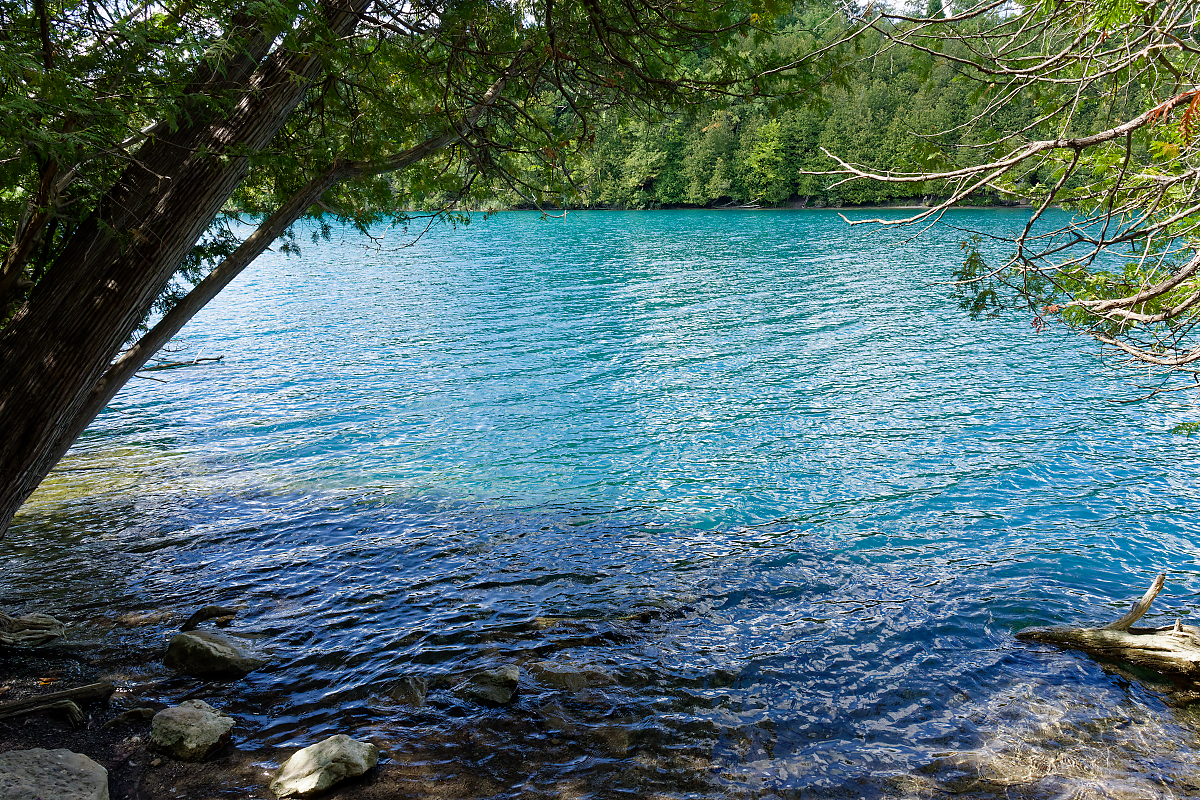
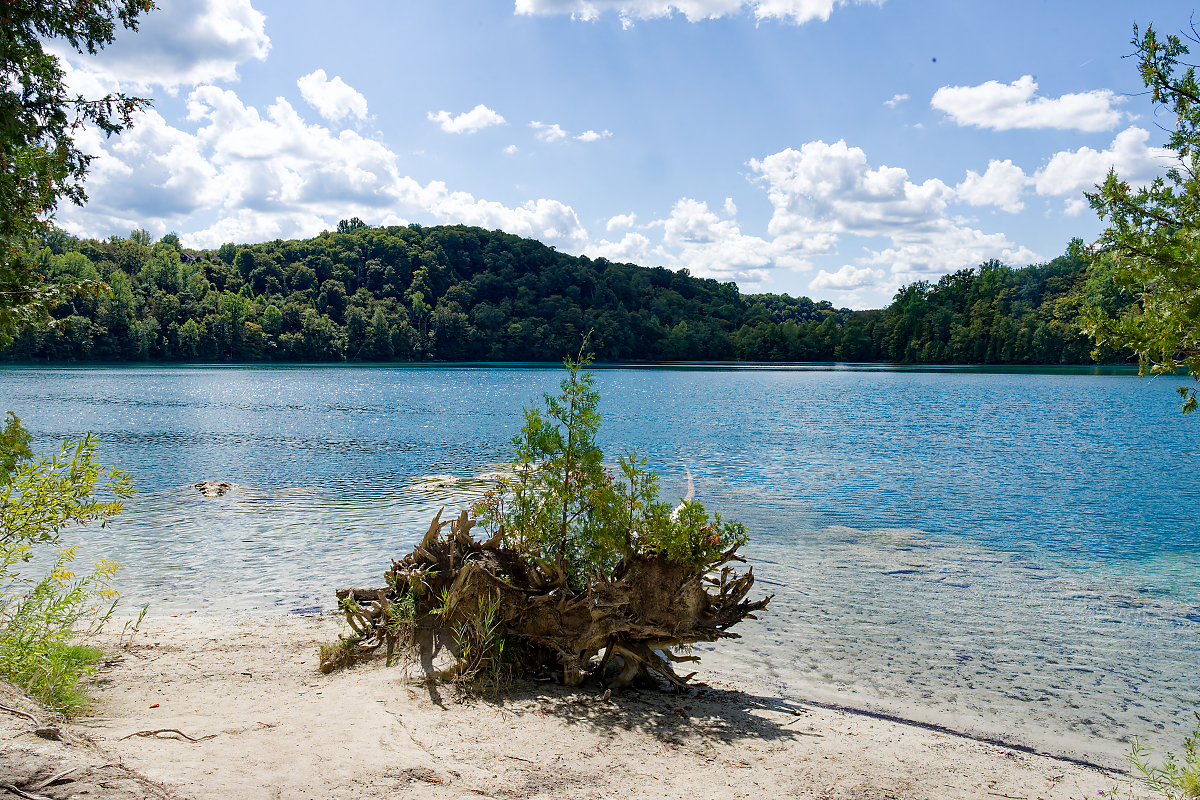
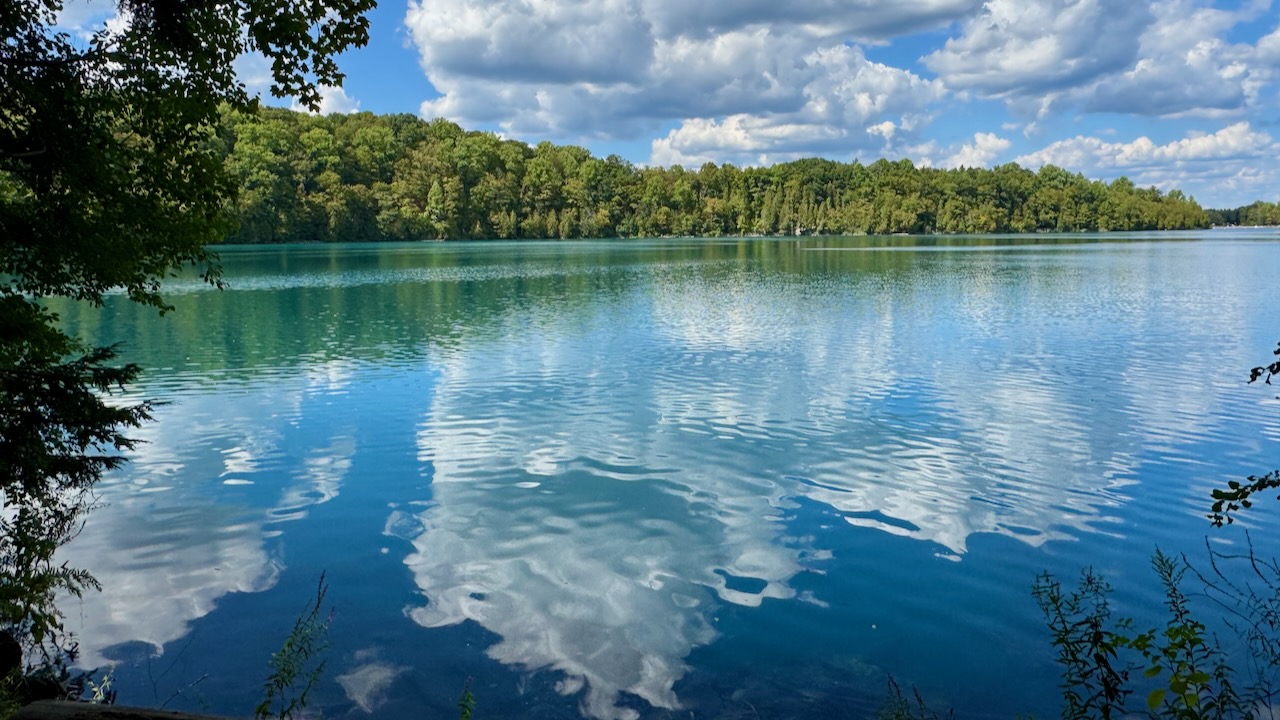
These are just one of the many reefs you see around the lake. It is hard to see in the photo but the water plummets deep just to the left of that reef.
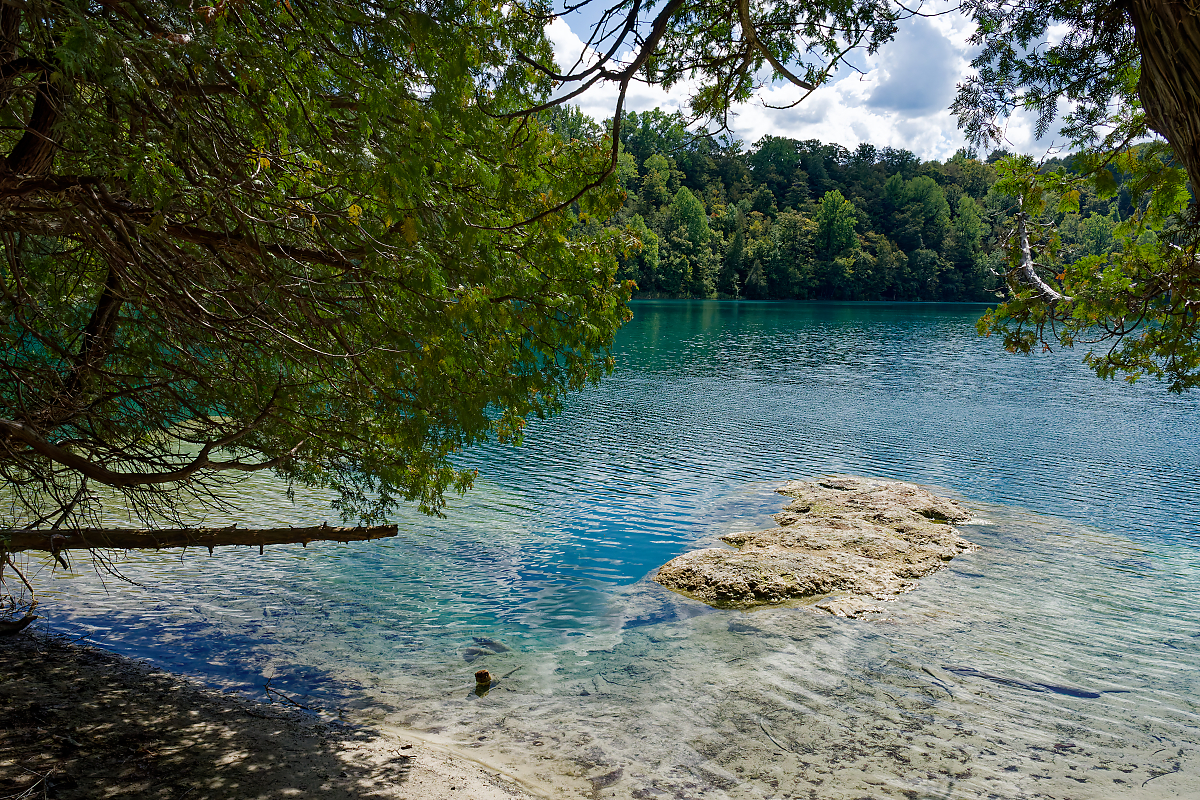
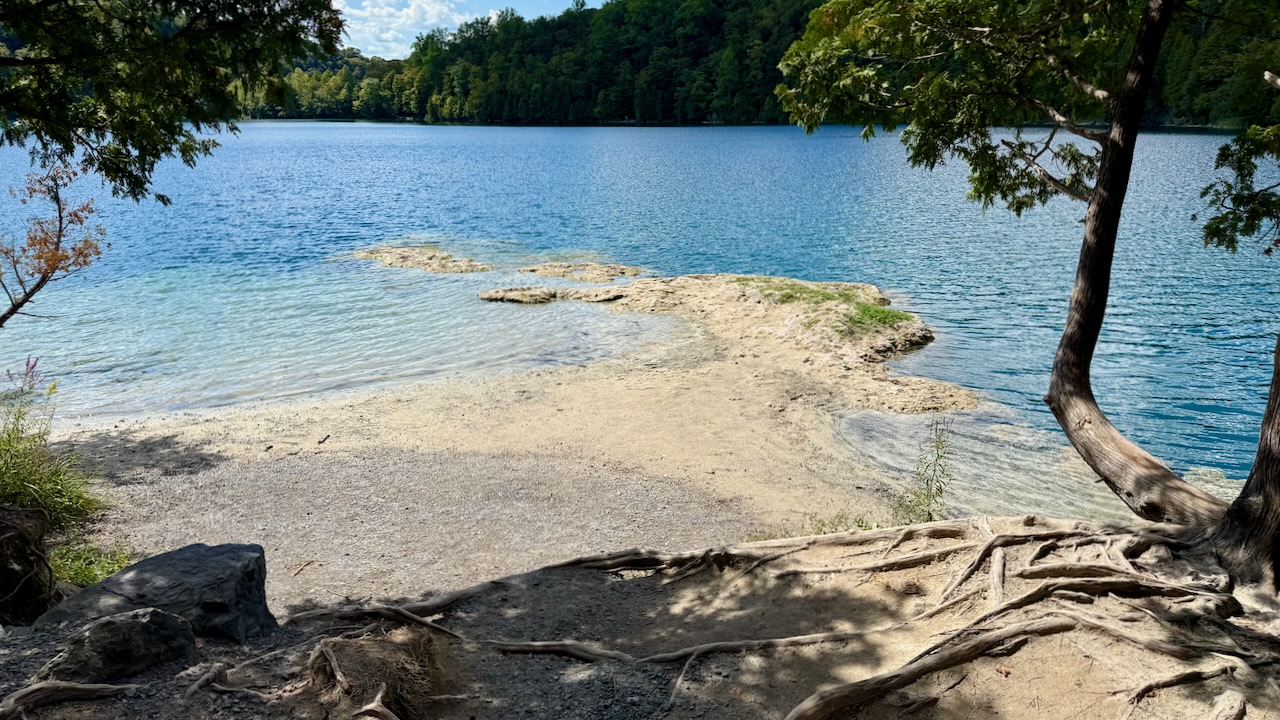
Again you can see how the water suddenly becomes deeper.
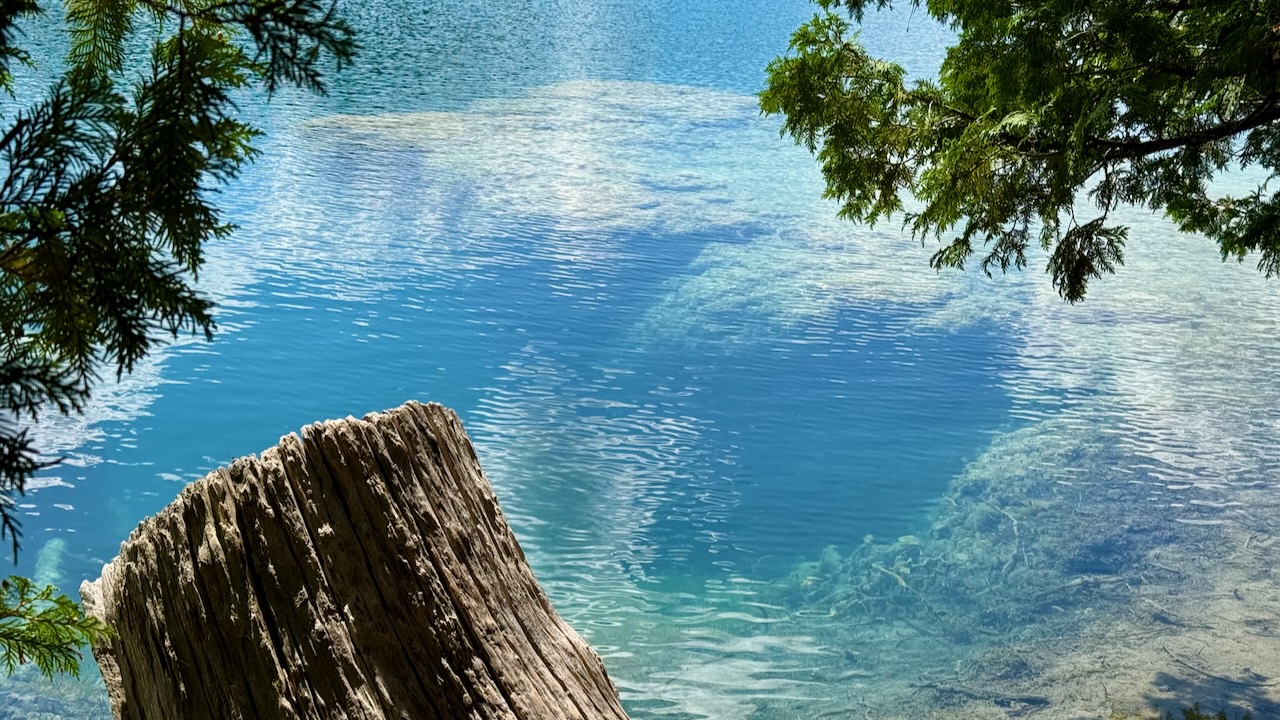
Deadman’s Point is the largest “reef” in the park. It looks like coral, but It is not made of corals. Rather, it is made of microbialites (rock-like underwater structures made of millions of microbes). These microbialites secrete a mucous that traps calcium carbonate. This creates living structures like rocks. The “reef” at Green Lakes was built up over thousands of years. Underneath these ledges, there are rare mosses and sponges. Science and Steam Team
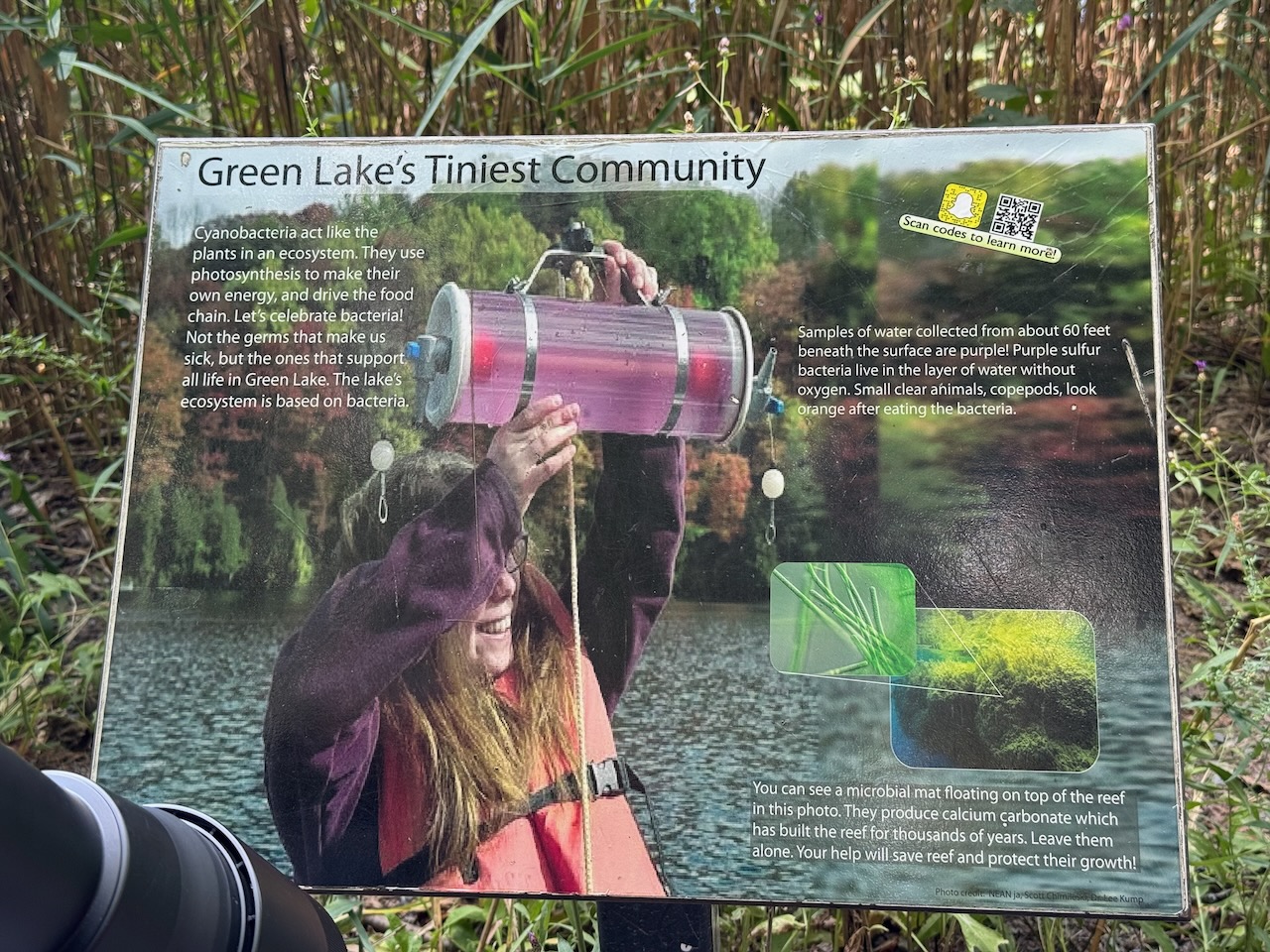
Cyanobacteria act like the plants in an ecosystem. They use photosynthesis to make their own energy, and drive the food chain. Let’s celebrate bacteria!
Not the germs that make us sick, but the ones that support all life in Green Lake. The lakes ecosystem is based on bacteria.
Samples of water collected from about 60 feet beneath the surface are purple! Purple sulfur bacteria live in the layer of water without oxygen. Small clear ahimals, copepods, look orange after eating the bacteria.
You can see a microbial mat floating on top of the reef in this photo. They produce calcium carbonate which has built the reef for thousands of years. Leave them alone. Your help will save reef and protect their growth!
(susan here: Donna and I were curious how many species there are of cyanobacteria. Some of them are very toxic. I looked it up and there are 8000 species of them. We were both pretty surprised.)
The bark and roots of the cypress trees are beautiful.
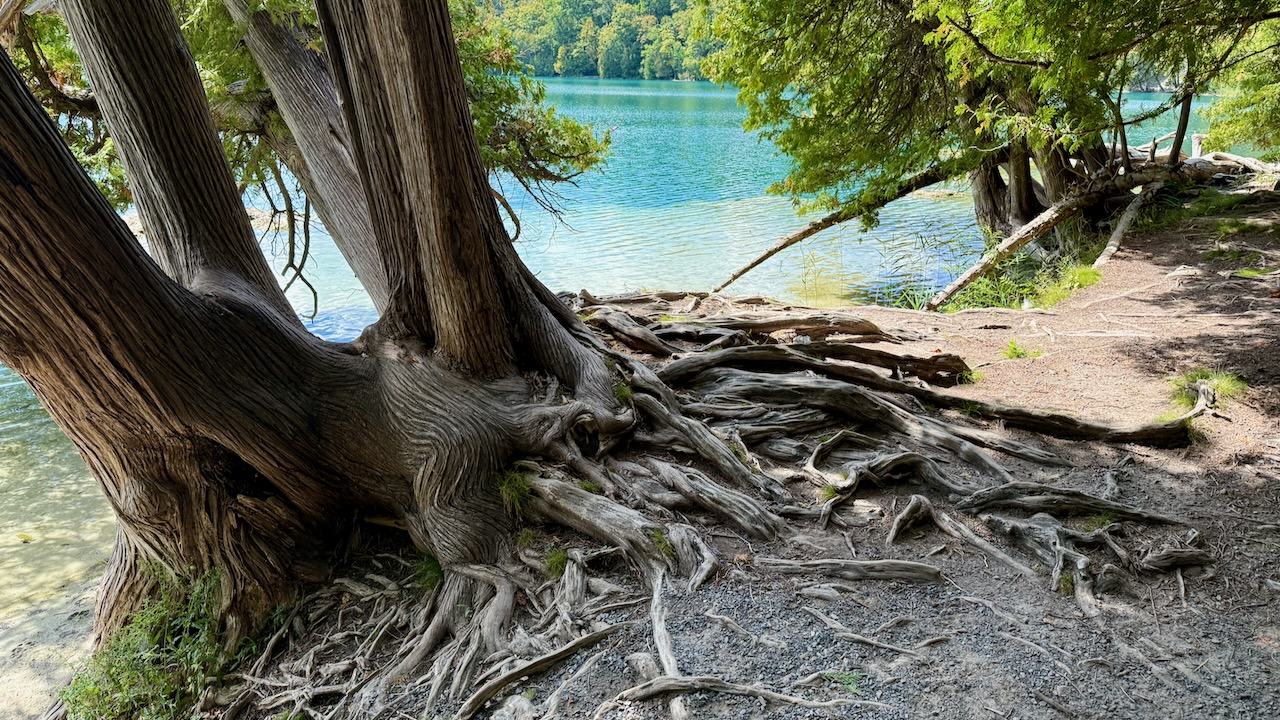
Beauty was everywhere. This is a very special place.
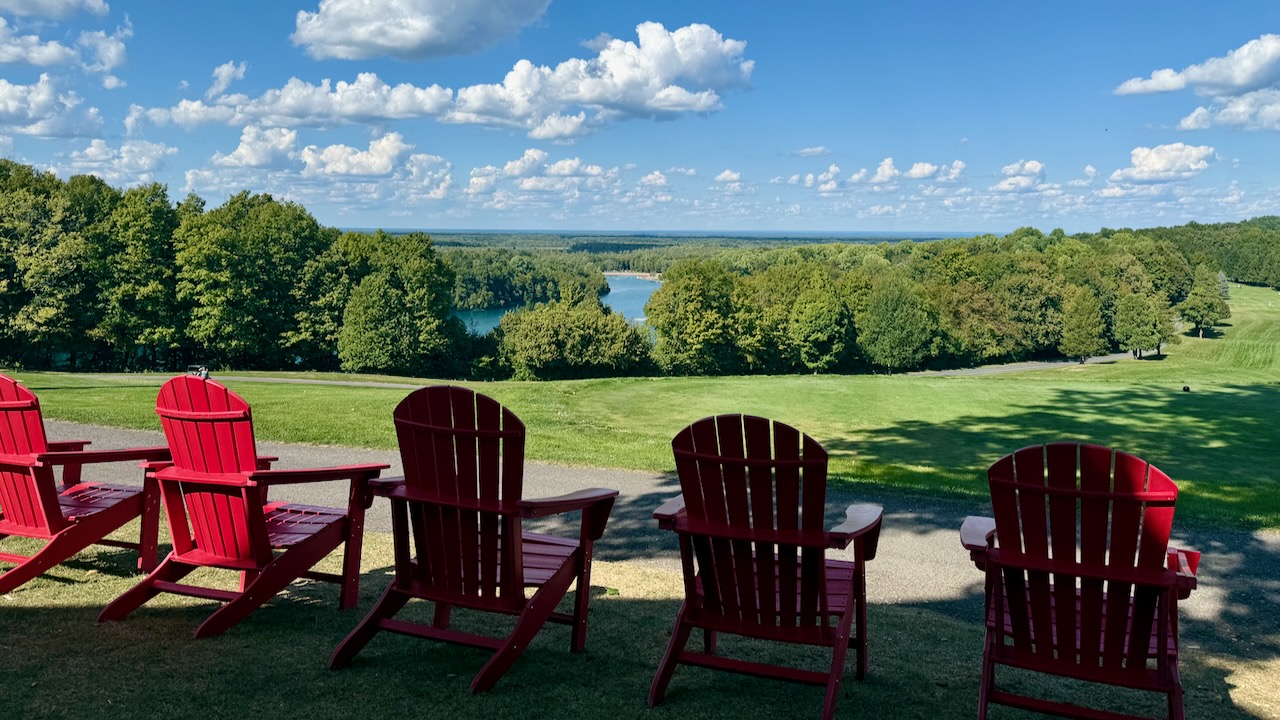
The docent also told us to drive up to the top of the ridge and look down over the lakes from the patio of the golf course’s restaurant. We did, but it was a lot more impressive from the lake side.
We went back at the RVs. Paul and Susan stayed put while Donna and Bill went out walking around some more. Dinner was had and then more conversation, games, and staying up way too late. Paul and Bill made plans to go bird watching in the early morning, around 6:30. Stay tuned to see how that turns out.